Newborn Essentials Checklist: What to Actually Buy Before Baby Arrives (2026)
A no-fluff newborn essentials checklist covering sleep, feeding, changing, clothing, and travel, plus where to spend, where to save, and when to buy for the best UK deals in 2026.
The complete newborn essentials checklist
A newborn essentials checklist should be built around five jobs, not a pretty nursery photo: sleep, feeding, changing, clothing, and travel. Getting this list right early keeps you calm instead of panic-buying in the last few weeks before baby arrives, and it stops you spending on gadgets you will barely touch. This guide walks through what a newborn genuinely needs in the first twelve weeks, where it is worth spending, and where a budget pick is completely fine.
A newborn genuinely needs five things: a safe sleep space, a feeding setup, changing supplies, basic clothing, and a correctly fitted car seat.
You do not need a fully styled nursery on day one. You need a safe place for baby to sleep, a way to feed them, a way to keep them clean and warm, and a safe way to travel home from hospital. Everything else can be added at your own pace once you know your baby.
Browse Ebebek's newborn rangeWhat you will learn
- The full newborn essentials checklist, organised by job rather than by shop aisle
- Which items carry a safety role and deserve real budget, versus items where any brand will do
- What you can safely skip or buy later, once you actually know your baby
- How UK retailers time seasonal sales so you are not paying full price on big-ticket gear
The complete newborn essentials checklist
A useful newborn essentials checklist is organised by what an item does, not by which shop aisle it sits in. Below is the core list broken into five jobs: sleep, feeding, changing, clothing, and travel. Treat the quantities as a starting point for a single baby at home, and adjust once you know your own routine.

Sleep
Sleep gear sits at the top of every newborn essentials checklist because it is the category with the clearest safety guidance. A safe sleep space is a Moses basket, crib, or cot that meets current UK safety standards, paired with a firm, flat mattress sized exactly to the sleep space with no gaps at the edges. Add two to three fitted sheets so one is always clean while others are in the wash, baby sleeping bags or cellular blankets rated for the room temperature, and a room thermometer, since the nursery should stay between 16 and 20 degrees Celsius. It is also worth knowing that a mattress should be new for each baby, rather than passed down from an older sibling. For a full night-by-night settling plan once the basics are in place, see how to get a newborn to sleep in a bassinet.

Feeding
If you are breastfeeding, keep a few muslin cloths, nipple cream, and one or two supportive nursing bras on hand. If you are bottle feeding, plan for four to six bottles, slow-flow teats, a steriliser, and formula. A breast pump is only worth buying before birth if you already know you will need to express early; otherwise it is fine to wait and see. Burp cloths and bibs are worth stocking generously, since you will get through them faster than you expect in the first weeks.

Changing
Buy newborn nappies, but only one pack of the smallest size to start, since babies move up a size faster than most parents expect. Cotton wool or fragrance-free wipes suit delicate skin in the first few weeks. A changing mat that wipes clean, a nappy bin or scented sacks, barrier cream for nappy rash, and a small first-aid basics kit round out this category.

Clothing and travel
For clothing, six to eight sleepsuits and the same number of bodysuits in newborn and 0-3 sizes covers most of the first month, plus a couple of cardigans, a hat, scratch mittens, and socks. If baby is due in colder months, add a pramsuit or a thick outer layer. For travel, you need an infant car seat suitable from birth and correctly fitted for your vehicle, a pushchair or travel system that lies fully flat for a newborn, and a changing bag, which can simply be any bag you already own.
Retailers such as Ebebek group their catalogue along these same five categories, which makes it easier to shop by job rather than by impulse. If you fill each category above before adding anything decorative, you will be genuinely ready for the first month.
Where to spend and where to save
Not every item on a newborn essentials checklist deserves the same budget. A few things carry your baby's safety or absorb months of heavy daily use, and those are worth spending on. Many others are used briefly or are effectively identical between brands, so a value pick works just as well as a premium one.
Worth the money
The car seat is the clearest example. It is a safety device, so buy new, never second-hand from a stranger, and prioritise a model that fits your specific car. Correct fitting is critical, because a poorly fitted seat is more dangerous than an expensive one is safe. The pushchair or travel system is the second big spend, since a newborn needs a fully flat lie-flat mode and you will push it thousands of times.
Retailers such as Ebebek stock recognised brands including Joie, Cybex, and Tommee Tippee, so you can compare frames, folding, and weight in one place. If you want a closer look at what shopping there is actually like, our Ebebek review covers the range and service in more detail, and our guide to choosing a baby travel system walks through the fit questions to ask before you buy.
The sleep space and its mattress are the third area not to cut corners on. As above, the mattress must be firm, flat, and sized precisely to the crib with no gaps, and it should be new for each baby.
Fine to save on
Clothing is where budget picks shine, because newborns grow out of the smallest sizes in weeks and you will stain most of it. Supermarket and value ranges are perfectly good. Blankets, muslins, burp cloths, and changing mats are commodities; brand names add little here. Nappy bins, bottle warmers, wipe warmers, and most 'smart' gadgets are convenience items you can skip entirely at first and add later only if you actually miss them.
A simple rule works well: if an item touches your baby's safety or gets used dozens of times a day for months, spend. If it is decorative, single-purpose, or quickly outgrown, save.

Ebebek stocks the full range, from safety-critical sleep and travel gear through to changing and bath basics, in one place.
Useful if you would rather compare car seats, cots, and pushchairs side by side than piece the list together across several sites.
Browse Ebebek's newborn rangeWhat you can buy later or skip entirely
Half of a typical nursery registry is things you do not need before the birth, and some you never need at all. Holding these back keeps your early spending sane and your house less cluttered while you adjust to life with a newborn.
Wait on the full wardrobe of 3-6 month clothes, the high chair, bath-time gadgets, the play gym, and second-stage bottles. A newborn does not sit in a high chair, does not need toys, and will not fit bigger clothes for months, so buying these now just means storing them.
You can usually skip a dedicated top-and-tail changing station, a bottle warmer, a nappy disposal machine, cot bumpers, which are not recommended for safe sleep, and most novelty comforters. A clean muslin and a warm room do the same job.
The smart move is to keep a running 'later list' alongside your newborn essentials checklist. When you spot something tempting, ask whether your baby needs it in the next four weeks. If not, it goes on the later list, and you buy it only once real life proves you want it. Many parents find that half their later list quietly disappears once the baby actually arrives.
Timing your purchases around sales
The final piece of a smart newborn essentials checklist is when you buy, not just what. Baby gear is discounted at predictable points in the year, and the big-ticket items reward a little patience. Travel systems, cots, and furniture are exactly the products retailers put on sale, so it is worth waiting for a promotion on anything over a certain spend.
Ebebek, for example, runs tiered spending offers, including money off per set amount spent and percentage discounts on baby gear and furniture above set thresholds, alongside a full-range catalogue and a price-match guarantee. For a large travel-system purchase, Klarna buy-now-pay-later is available to spread the cost. Once you have placed an order, orders placed before roughly 4pm are typically dispatched the same day, and delivery is free and express on orders over about £50. If you are buying several large items at once, consolidating them into one order during a tiered sale can push you into a higher discount band.
Where to go next
Build the checklist by job, not by impulse
A calm, well-timed approach beats a frantic one. Build your list around the five core jobs, spend where safety and daily use demand it, hold back everything you can add later, and let the sales come to you. Do that and you will arrive at your due date genuinely prepared, without a stack of barely-used gadgets to quietly give away later.
If the car seat and travel system are your next decision, our guide to choosing a baby travel system breaks down the fit questions worth asking before you buy, and our Ebebek review looks at what ordering from the store is actually like.
Browse Ebebek's newborn rangeThis article is for general information and is not a substitute for the safety instructions supplied with your specific mattress, car seat, or nursery furniture, or for official NHS and manufacturer guidance. Always follow the fitting and safe-sleep instructions that come with your own equipment.
Recommended for you
- Ebebek Review 2026: Best UK Baby Store or Skip It?
 Bink Day Bottle Honest Review 2026: Is the $38 Glass Bottle Worth It?
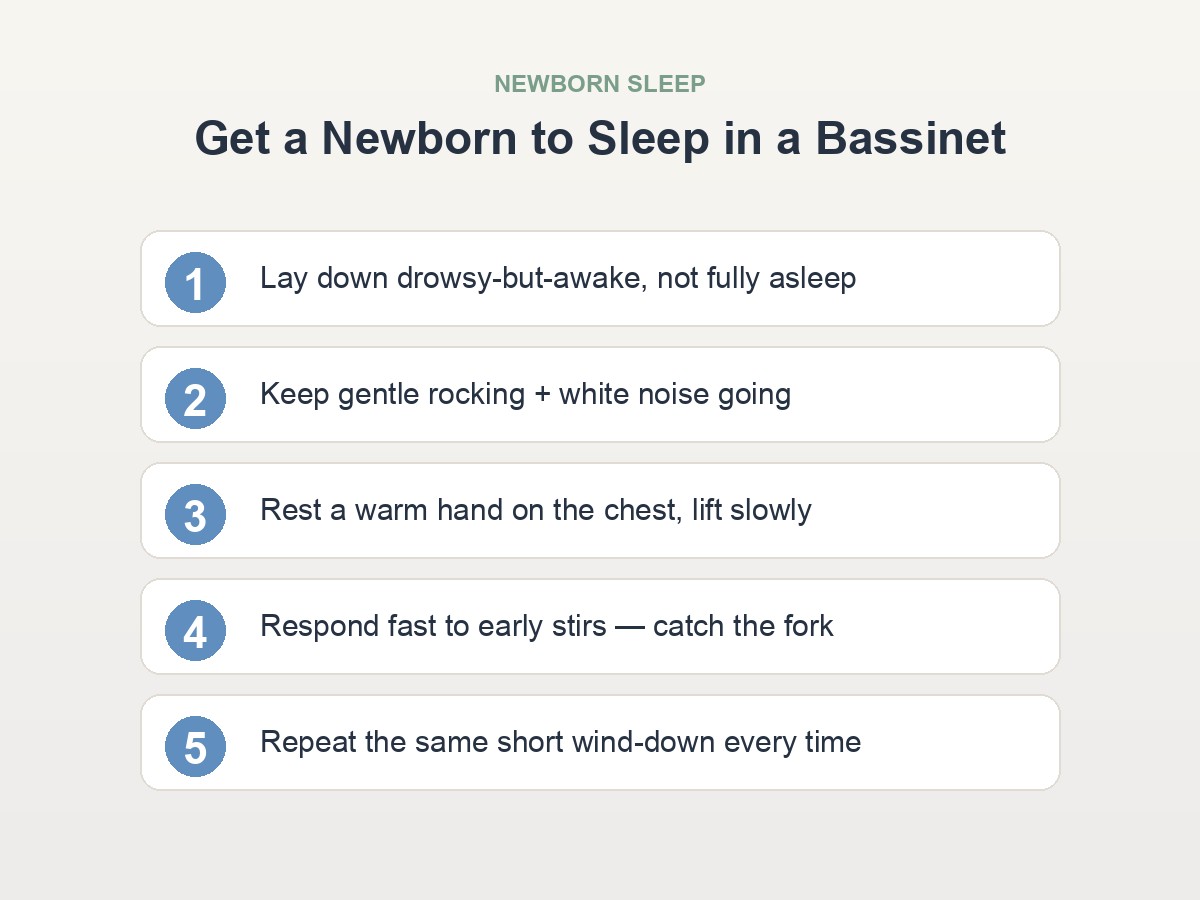 How to Get a Newborn to Sleep in a Bassinet: A Calm, Night-by-Night Plan
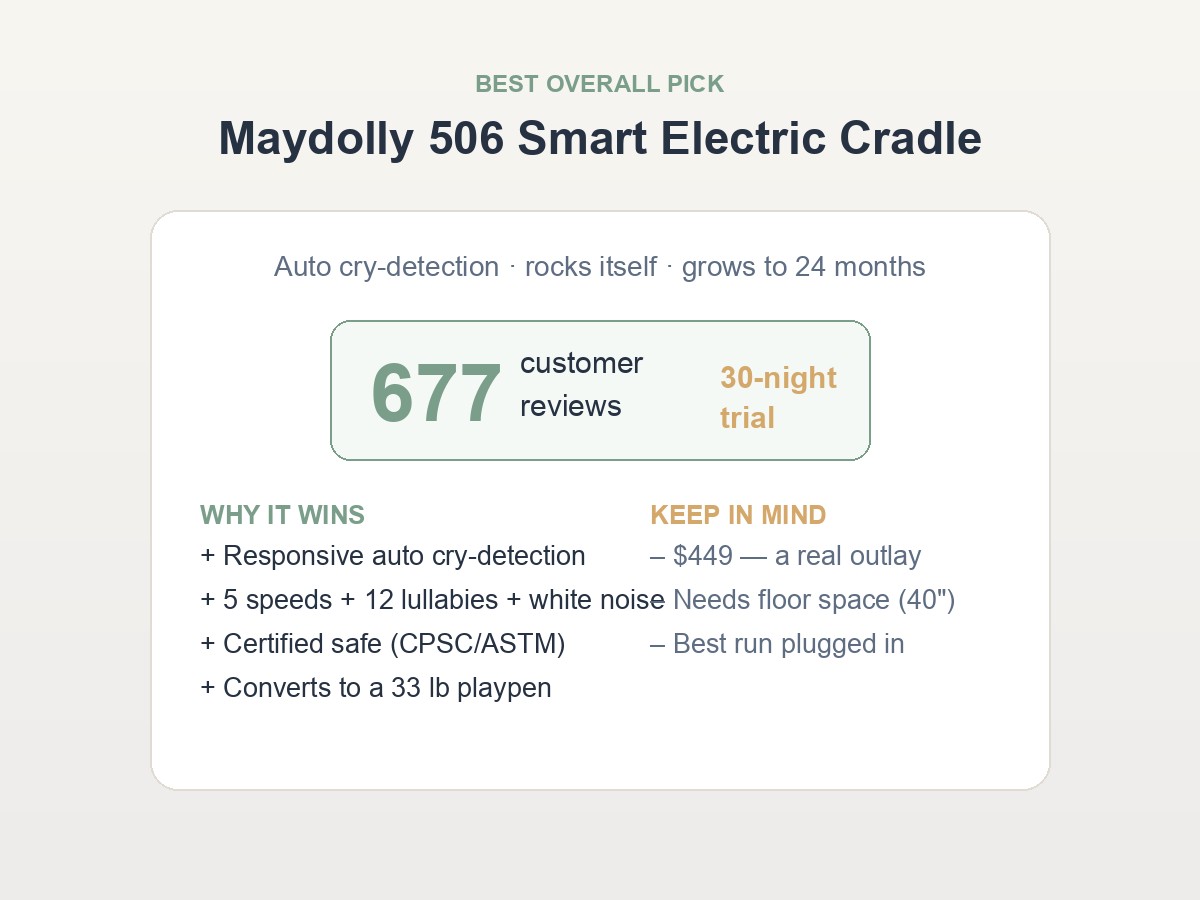 Maydolly 506 Smart Electric Cradle Review (2026): Is the Auto-Rocking Bassinet Worth $449?
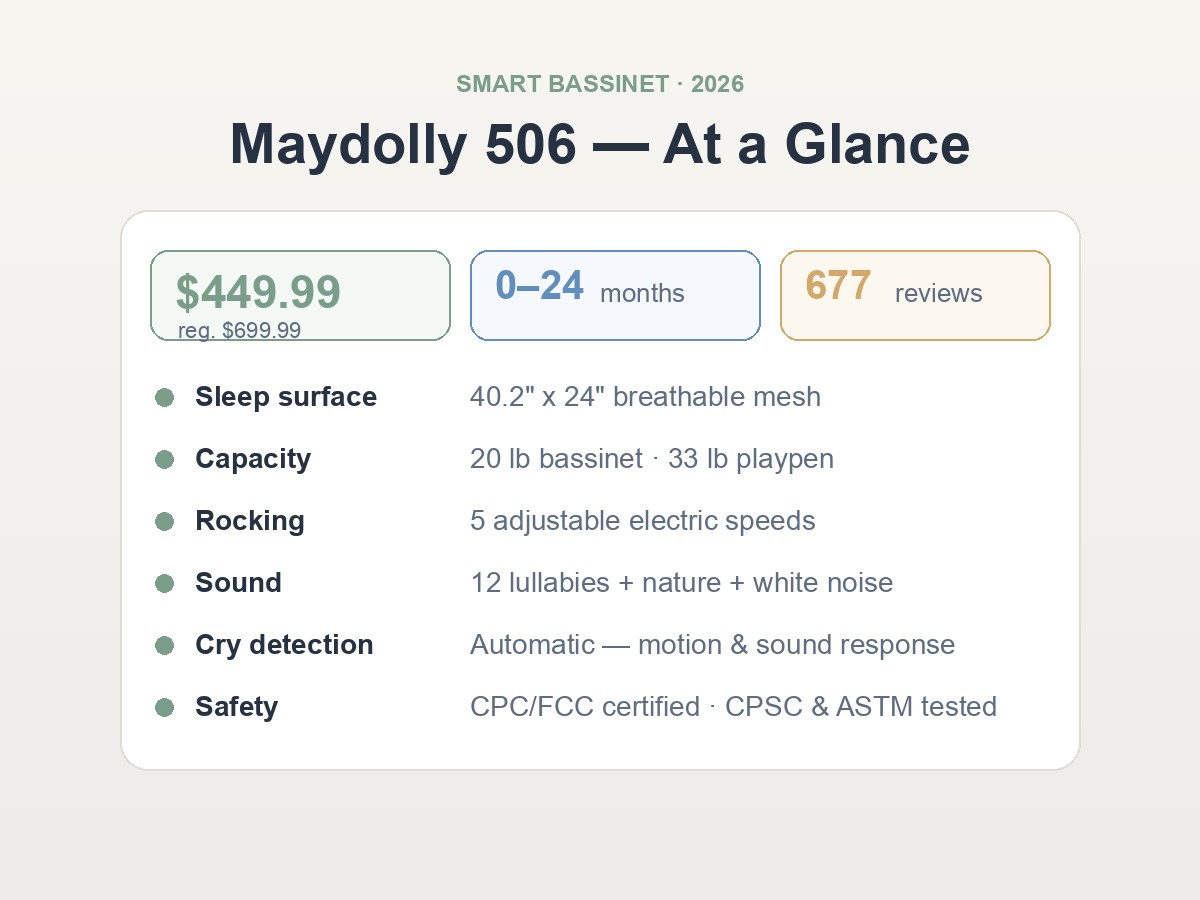 Best Smart Bassinet for Newborns in 2026: The Complete Buyer’s Guide
 Snoozeshade Review: The Ultimate Sleep Companion For baby