How to Get a Newborn to Sleep in a Bassinet: A Calm, Night-by-Night Plan
How to get a newborn to sleep in a bassinet, step by step. A calm night-by-night plan, plus the auto-rocking smart cradle that makes those 3 a.m. wakeups easier.
Start With the Right Sleep Space
How to Get a Newborn to Sleep in a Bassinet: A Calm, Night-by-Night Plan
Almost every new parent hits the same wall: the baby sleeps perfectly in your arms, then wakes the instant they touch the bassinet mattress. It feels personal. It is not — it is biology. Newborns are built to seek the motion, warmth, and sound of being held, and a still, silent bassinet is the opposite of that.
The good news is that learning how to get a newborn to sleep in a bassinet is a skill, for them and for you. Here is a calm, realistic plan that works with a newborn’s wiring instead of against it. (Shopping for the right cradle first? See our best smart bassinet for newborns guide.)
Start With the Right Sleep Space

Before any technique, get the environment right — it does half the work.
- Firm, flat, breathable. Safe-sleep guidance is consistent: a firm, flat mattress with breathable sides, no soft bedding, no incline. This is the foundation, full stop.
- Recreate the womb cues. Newborns settle to gentle, continuous motion and steady white noise. The closer your setup gets to that, the easier the transfer.
- Right height, right beside you. A bassinet at the same height as your bed makes night transfers far less disruptive — for you and the baby.
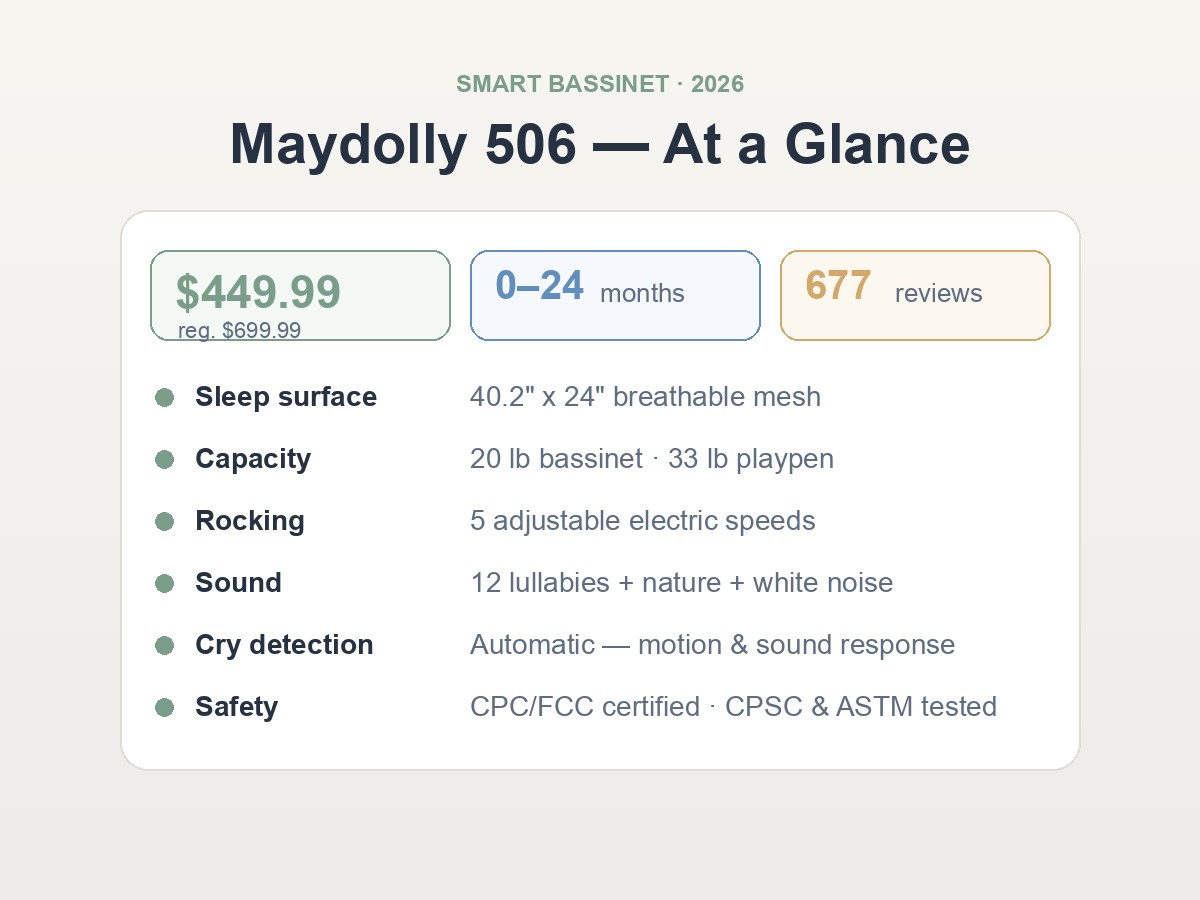
This is exactly where an auto-rocking smart cradle earns its place. A model like the Maydolly 506 Smart Electric Cradle provides the gentle rocking and white noise newborns crave automatically — and its automatic cry detection responds the moment your baby stirs, often resettling them before they fully wake. It is not magic, but it removes the single hardest part: keeping the soothing going while your own hands are free.
The Night-by-Night Plan
You do not need to do everything at once. Build the habit in layers.
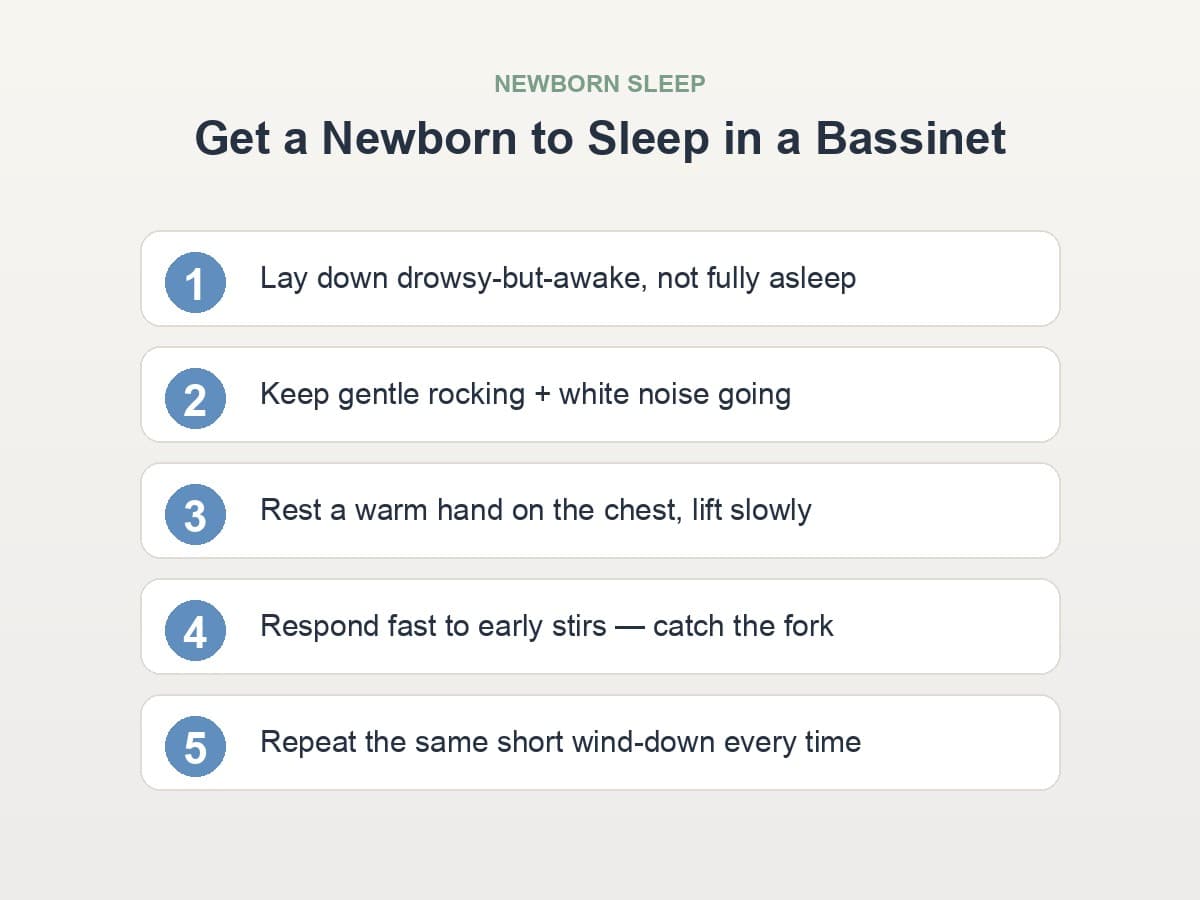
Step 1: Master the drowsy-but-awake transfer
The classic mistake is waiting until the baby is fully asleep to put them down. Aim instead to lay them in the bassinet drowsy but still awake — heavy eyes, slow blinks, calm body. This teaches them to fall asleep in the bassinet, not just to wake up in a strange place.
Step 2: Keep the motion and sound going
The transfer from arms to mattress is a jarring change. Continuous gentle rocking and white noise smooth it over by keeping the sensory experience consistent. With a smart cradle, the rocking and sound simply continue; doing it manually, sway the bassinet gently and keep your white noise running through the transfer.
Step 3: Use a hand-on-chest pause
After laying the baby down, rest a warm, still hand on their chest or belly for a minute. The pressure and warmth bridge the gap from “being held” to “lying alone.” Lift slowly once their breathing settles.
Step 4: Respond fast to early stirs
A newborn’s stir is a fork in the road: catch it early and they resettle; miss it and you are starting over with a fully awake, upset baby. This is the whole value of automatic cry detection — it reacts in seconds, at a speed no exhausted human can match at 3 a.m.
Step 5: Build a tiny, repeatable wind-down
Babies learn by repetition. A short, identical sequence — dim lights, swaddle, white noise on, into the bassinet — becomes a signal that sleep is coming. Keep it to a few minutes and do it the same way every time.
Troubleshooting the Common Snags
- Wakes the second they’re set down? They are going down too deeply asleep. Move the transfer earlier, to drowsy-but-awake, and keep the motion running.
- Startles itself awake? A snug (safe, flat-back) swaddle reduces the startle reflex that jolts newborns out of sleep.
- Fights the bassinet only at night? Check temperature and noise. Steady white noise masks household sounds; a breathable mesh design helps with overheating.
- Short catnaps only? Newborn sleep is short by design in the early weeks. Consistency matters more than duration — keep the cues identical and the longer stretches come with time.
The Realistic Takeaway
Getting a newborn to sleep in a bassinet comes down to two things: a safe sleep space that mimics the comfort of being held, and a calm, consistent routine you can repeat at 3 a.m. without thinking. Nail the environment — firm and flat, gentle motion, steady sound, fast response to stirs — and the technique gets dramatically easier.
A smart, auto-rocking cradle handles the motion, sound, and rapid response for you, which is why so many tired parents lean on one through the newborn months. See our full Maydolly 506 review for the model most parents land on.
How to Get a Newborn to Sleep in a Bassinet: FAQ
Why does my newborn wake up the moment I put them in the bassinet?
Because they go down too deeply asleep and the still, silent mattress is the opposite of being held. Transfer them drowsy-but-awake and keep gentle motion and white noise running through the transfer.
How long does it take to get a newborn used to a bassinet?
It varies, but consistency is what matters. Repeat the same short wind-down and sleep cues every time and most newborns settle into the bassinet over the first few weeks.
Does an auto-rocking bassinet help a newborn sleep?
It can. Continuous gentle rocking and white noise mimic the womb, and automatic cry-detection catches early stirs faster than an exhausted parent can — though it never replaces safe-sleep supervision.
Is it safe to leave a newborn in a smart bassinet overnight?
Use only a certified bassinet with a firm, flat, breathable surface, follow safe-sleep guidance, and treat the smart features as a soothing aid rather than a substitute for monitoring.
👉 See how the Maydolly 506 auto-rocking cradle handles the 3 a.m. shift →
Recommended for you